

Ecommerce

A storefront built to turn browsers into buyers

Looks alone do not sell a product. We build the pages, the checkout, and the speed that carry a sale, then match the whole build to the platform your catalog needs.

Brown cardboard shipping boxes sealed with kraft tape, stacked and ready for fulfillment

Your storefront is the weak link if

  • You sell a physical product online, and your current site undersells what you have built or cannot keep pace with your catalog.
  • Slow pages or a checkout buyers give up on are costing you sales you can see in your own numbers.
  • You are not sure whether Shopify, Webflow, or something else fits the way you sell, and want a clear recommendation.
  • You want a storefront that looks and feels like your brand at every step, from the first product page to the order confirmation.

The problem

Where a storefront loses the sale

Most lost sales trace back to a specific page. A product page loads slowly and the buyer is gone before it finishes. The catalog hides the product someone arrived ready to buy. The checkout asks for payment before it has given anyone a reason to trust it.

Each of those is a build decision. Someone chose how the catalog is organized, what the checkout shows before it asks for anything, and how fast every page loads. That is true whatever platform the store runs on.

So our build starts at your checkout and works backward from it, until every page a buyer crosses on the way there is doing its part of the sale.

What it takes to scope your store

From first message to a scoped storefront plan in three steps.

1

Day one

Tell us what you sell

Write to us with what you sell, roughly how large the catalog is, and what the store runs on today. You get a reply written by a person, with questions about your products and your buyers.

2

Within the week

A free discovery consult

We go deeper on the products you carry, how many orders you handle, and where the current store loses them. You leave the call with a spoken plan for the storefront and which fixes come first.

3

Days after the consult

You get a proposal

We send the proposal in writing: the scope, the cost, and a launch date. Work begins when you sign it.

What your store build includes

Product and category pages

Category structure, filters, and product page layouts that stay easy to browse whether you carry 50 products or 500.

Checkout, payments, tax, and shipping

All of it configured and tested, with security badges and your shipping and return terms placed where a first-time buyer looks before entering a card number.

Pages that load fast on a phone

Most of your buyers shop from a phone, where every extra second of loading costs sales, so product and category pages are built to stay quick.

Repeat orders and store training

An email signup and order confirmations set up to bring buyers back, plus training so you can add products yourself. We can also keep the site maintained month to month, covering product updates, speed, and security.

Built for a product like yours

Hero product shot of the Sapa and Co sweet soy sauce bottle
Sapa and Co product bottles displayed at an event booth
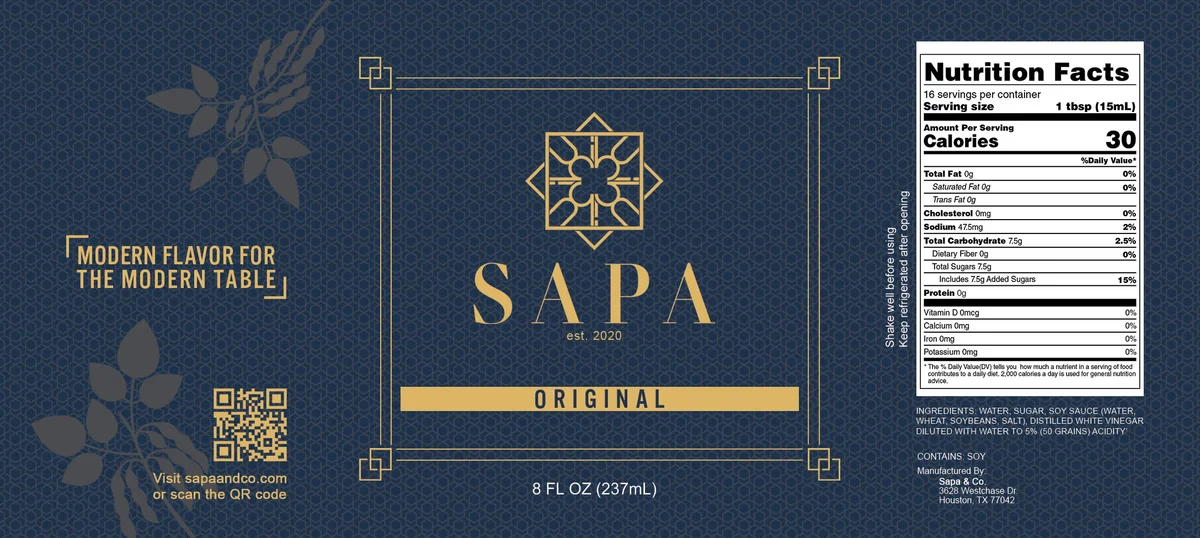
The finished label for the Original flavor, in the navy and gold system

Sapa & Co.

Sapa and Co moved from a Houston restaurant condiment to a packaged product, a sweet soy sauce selling to buyers who had likely never heard of the brand before landing on the page.

Our work was the part a buyer judges first: the navy and gold brand, the bottle labels, the product photography, and a page experience built to read as premium before flavor enters the conversation.

A custom bottle-follow interaction keeps the product on screen as the visitor scrolls, so the bottle is still in view when the buying decision lands.

The same visual system that stops people at events now holds attention on the product page, winning over buyers who have not tasted the product yet.

Read the full case
More ecommerce builds

Mint Crate

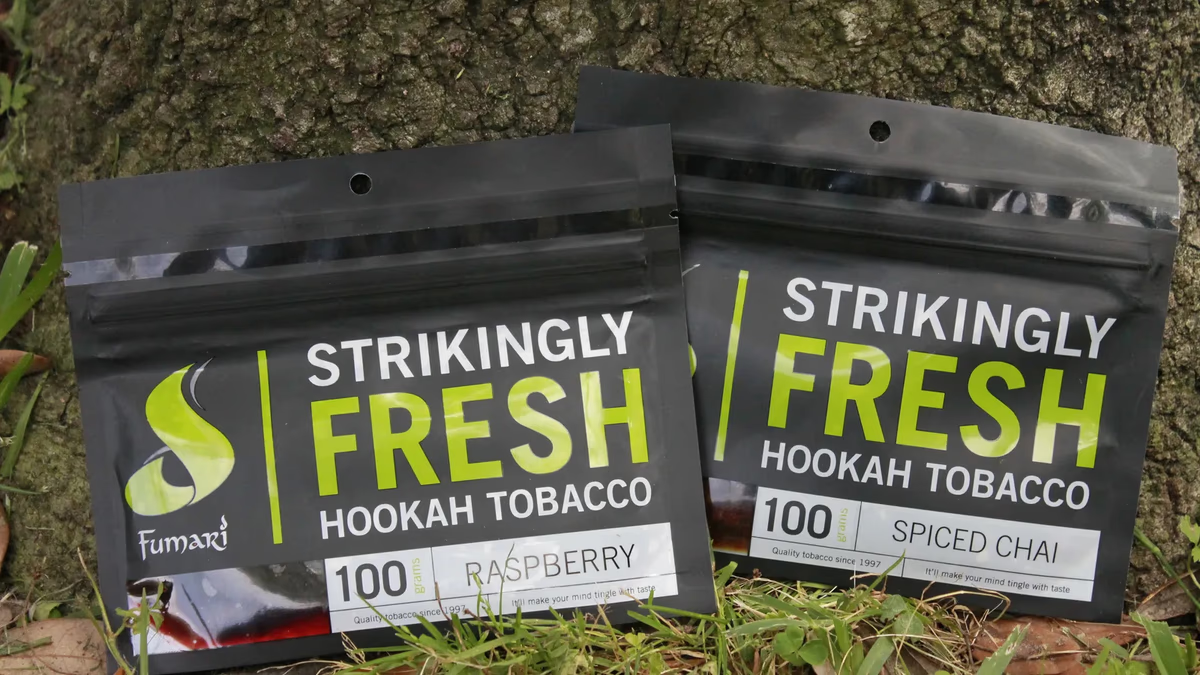
Mint Crate launched as a subscription shisha brand in 2015, when subscription commerce itself was still a new category. We built it from the name up: the logo and colors, the WooCommerce store, and the flavor questions behind each personalized monthly box.

The storefront had to earn trust fast, because a subscription asks a customer to pay before they have tried the product.

50 orders

Approximate launch-day orders for Mint Crate

The rename and the storefront gave a first-time subscription concept enough credibility to take orders before a single box had shipped.

Before you decide

How much does it cost to design an eCommerce website?

A full Shopify store starts at $8,800. That price carries the whole store: the design, the development, the copy, product setup, checkout, and payment processing.

Catalog size moves the number up from there, and so does custom product photography.

Selling by subscription adds build work, because the checkout has to bill a customer automatically for repeat orders. Wholesale does too, with business buyers logging in to see their own rates. A brand designed from scratch is its own line.

Every proposal we send is priced against the store you actually run.

Will shoppers find my store on Google or in AI answers?

Each product page is built with its details written the way Google and AI assistants read them: what the product is, what it costs, and whether it is in stock.

That is what search results, the shopping tab, and tools like ChatGPT and Perplexity pull from when they show or recommend a product.

If local buyers matter to your store, we set up your Google Business Profile too, so you show up on the map next to those results.

Do you build the store on Shopify or Webflow?

Yes. Either platform gets the full build: the storefront, the checkout, and the payment, tax, and inventory setup behind it.

Which fits depends on your catalog and order volume. Shopify carries most physical-product stores well out of the box, and Webflow suits a smaller catalog attached to a site that mostly publishes pages and articles.

The free consult ends with a recommendation for yours, and you decide from there.

Start with a free call about your ecommerce build

Book the free call and walk us through your store. It costs nothing to find out what the fix would take.